


CNC Turning Parts
Waht is CNC Turning Parts
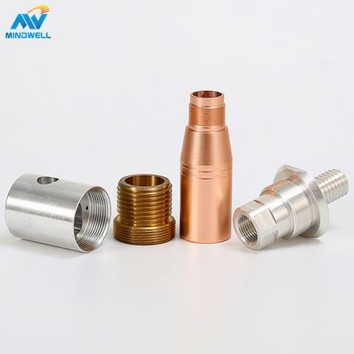
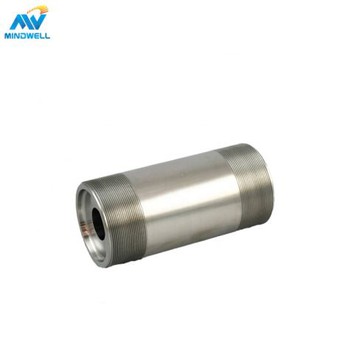
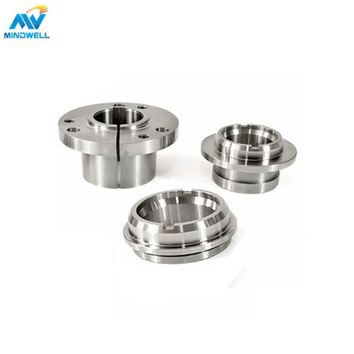
CNC Turning is a specific type of CNC Machining, referring to the particular subtractive machining process where the final piece, or material, is spun at high speed and a cutting tool shaves away material. However, unlike the more commonly used CNC milling technique, CNC turning uses one of the oldest styles and forms of manufacturing. This is because CNC turning works to the same principles as a lathe, a tool that has been used by humans as far back as Ancient Egypt.
Product advantages CNC Turning Parts
Safer Operations
Compared to other manufacturing options, CNC turning is very safe. Of course, any kind of rotating machinery can be dangerous. The difference with CNC turning machines is that they can be very hands-off. Making CNC turned parts allows the operator to rely on automation through the CNC. In some cases, it's as easy as setting up a program, hitting "run", and walking away from the machine.
Efficiency Is Improved
With any CNC machine, efficiency is improved by a lot. When you need to manually measure, move, adjust, and run machines, there's a lot of room for error. It's a simple fact that computers can help us be more efficient than ever.This means saving time, getting better results, and getting more done each day. With higher precision, shops can create more intricate parts and generate more impressive assemblies. When we use our CNC turning machine, we create high-precision parts that would be otherwise impossible to make.
Improved Repeatability and Accuracy
With large orders, accuracy and repeatability are among the biggest concerns. If a machine can create a lot of nearly identical parts very quickly and hit small tolerances, then the customer will get the best results. CNC turned parts are some of the most accurate and repeatable when it comes to manufacturing.As we mentioned earlier, there's an ability to set up a program, and then let the machine do all the work. When it comes to making medium-scale production runs, the same program can be repeated 100 times to make 100 parts.
Throughput Is Increased
Another big benefit of CNC turned parts is that they can be fabricated much quicker than if you used other methods. If you wanted to make a dozen sleeves that had a certain ID, OD, and length, it could realistically be done with a single piece of material and three cutting operations.The added precision and accuracy mean that inspection goes quicker, and rejection happens less often. As a result, the shop has a higher throughput of whatever parts they CNC turn.




Why choose us
Company technical strength
Company has advanced die-casting equipment and injection molding equipment, as well as a relatively complete enterprise management model. Our technicians can provide technical support in all aspects from product design, material selection to processing technology.
Product design
At MNW, you can choose the die-casting or injection molding process according to the size and shape of the parts you want. Our engineers give professional advice on materials, precision, and shell shape during design, and conduct simulations and tests.
Quality Management
The production of die-casting and injection-molded parts undergoes strict quality inspection, and a strict quality management system ensures stable and reliable product quality, meeting customer needs and industry standards. It has been widely recognized and praised by customers.
Supporting services
Offers a complete assembly capability, including manual and automatic assembly lines, to meet customers' needs. There is also online assembly testing and verification, committed to the goal of zero defect products, and continuous strict and reasonable process management.
Benefits of CNC turned components
Precision is the most obvious reason to pick CNC turning components. Using an advanced machine, experts can provide absolute accuracy, whether producing a model or completing a full production run. Mainly when accuracy is critical, one small defect or being off on tolerance could be enough to wreak havoc. Because the machine used is programmed, every cut performed is accurate. In other words, the last component completed in a production run is the same as the first.
Lower cost and expenses
When sourcing from a professional CNC machine shop, improved inventory control, and shorter production cycles translate into significant savings in stock and energy costs, as well as shorter lead times.
Flexibility
Is another benefit of precision turning services. Because the tasks that this machine carries out are programmed, making changes is comparatively straightforward. By obtaining the keypad, the operator of the machine can complete one component for your company and then make proper programming changes to manufacture something completely different.

Types of Lathes Used in CNC Turning
There are several types of lathes used in CNC Turning. Each of them are suited for different projects.Out of the many style of lathes available, there are four that commonplace in precision engineering workshops. Here is a brief description of what they are and what they do:

Horizontal CNC Lathes
One of the most commonly used machines in CNC Turning and grip the workpiece from the side.

Vertical CNC Lathes
Hold the workpiece from the bottom and spin it like a top.

Horizontal Turning Centres
Enclosed CNC lathes that are able to integrate milling and drilling capabilities. They can also include things like conveyor belts and coolant flooding.

Vertical Turning Centres
A combination of a horizontal turning centre and a CNC mill.
What is the difference between CNC Milling and Turning
There are some fundamental core differences between CNC Milling and Turning. The core mechanisms differ, meaning some processes will be more suited to milling or turning, respectively.
Factors that will affect this include:
Shape and size of the part
Material in use
The volume of parts required
Finish required
Budget
Small Aluminium Part With Knurling finish
In deciding which CNC machining process is suited to what design, the biggest determining factor is the part shape followed by the volume of parts needing to be produced.


How Does CNC Turning Parts Work
The CNC Turning Parts process involves the raw material being secured and turned by the lathe while a single point cutting tool is moved parallel to the axis of rotation – thereby shaping the material. The exact measurements are fed into a machine via CAD software.
Once the computer has read the instructions, it controls the lathe to ensure that the parts are manufactured to the exact specifications required. This is different to conventional machining, since it is the work station that rotes rather than the cutting tool.
Because of how they operate, CNC Turning Parts is typically used to make more cylindrical or oblong shaped components. The technique is also chosen ahead of CNC Milling and 3D printing because of its ability to produce multiples of the same component quickly and from one single piece of raw material.
Safety of CNC Turning Centers
The safety of the CNC machinist and any other personnel within the machine shop is much higher compared to where traditional machining options are used. Since the machine is largely computer-controlled, the level of manual labor requirement is minimal.
The role of the machinist is usually only to oversee everything as the CNC turning rotates. Since the rotating parts of the CNC lathe machine are typically well covered, the chances of pieces flying out and causing injury are minimal.
Today's marketing environment is highly competitive, so even the speed of delivering products to customers matters. CNC turning is not only capable of applying high turning speed but it is also less prone to errors. With a CNC lathe, one can deliver accurate products faster.
Those in mass production activities particularly find the turning and milling capabilities CNC turning center option essential in satisfying high demand without compromising on quality.

What Are the Advantages of the CNC Turning Parts Process

All Materials Are Interchangeable
While turning is mainly used to machine metals, any material can be used in turning, including wood and plastic. This makes turning a very flexible process.

Tolerance is Excellent
Turning can be used to create parts with extremely high tolerances. Because of the high tolerances and surface finishes that turning can offer, the process is often used for adding precision rotational features to a part whose basic shape has already been formed through a different method.

The Lead Time is Short
Turning has a short lead time. Lead time is the time between when the customer places an order and when the customer gets the final delivery. Because turning is a fast process, the lead time is short.

There is No Need for a Highly Skilled Operator
Turning does not require a highly skilled operator of the machine. To handle a CNC lathe, a machinist can complete a set amount of coursework and earn certification from an accredited industrial training organization.

As a professional plastic injection molding and die-casting manufacturer, MINDWELL exports all the injection molded parts and die-casting parts to countries all over the world. Our factory is ISO 9001:2015 certified and has perfect quality control procedures. We also have raw material certification, CE certification, SGS certification, etc.
Our Factory
Our company is an industry & trading company that covers research and development, production, processing, and sales. Our company has lots of excellent workers who design and make a mold to reach our customer's requirements.


FAQ
We're well-known as one of the leading CNC turning parts manufacturers and suppliers in China. With 15 years' experience, our factory offers high quality CNC turning parts made in China with competitive price. Welcome to contact us for custom service.
Cnc Lathe Turning Part factory, the basic axis of cnc turning centre, grooving operation in cnc lathe